
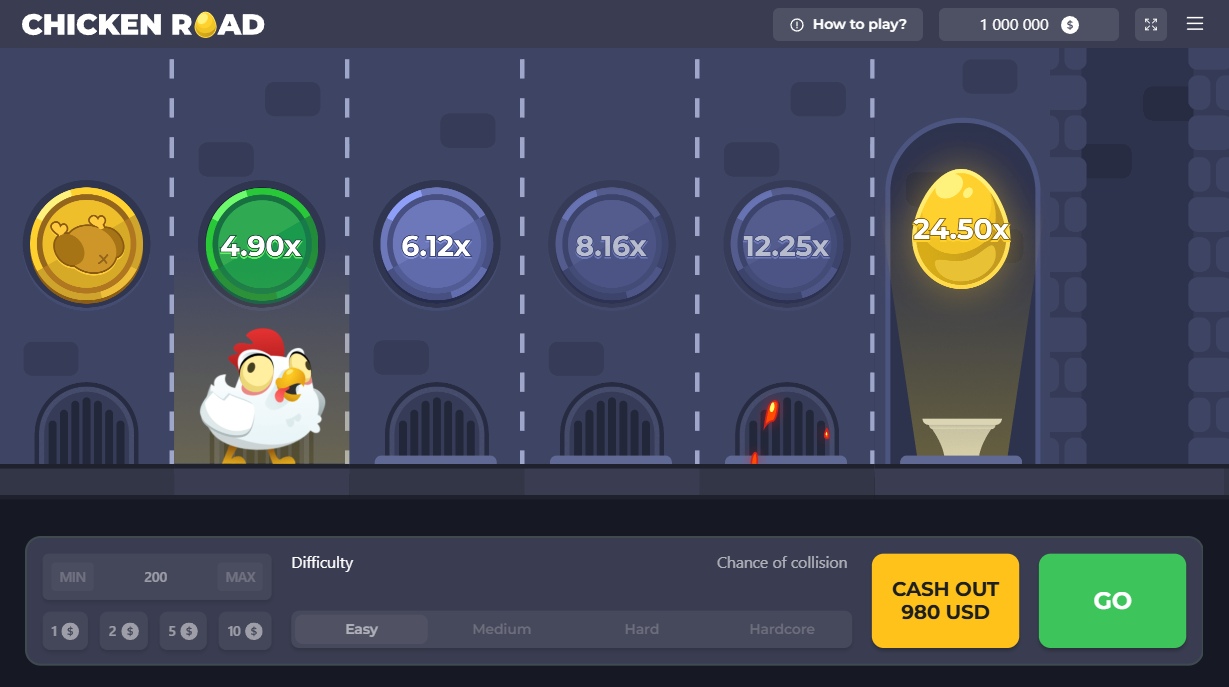
The majority of players encounter slots as fixed paylines, but Chicken Road employs a different engine. I wrote this guide to explain how all-ways mechanics work, why they transform the way you view a winning screen, and how Chicken Road transforms that structure into a farm-road slot with bonus pace. By the end, you will understand exactly what to check before you bet.
The True Meaning of «All Ways Pays»
Moving from Fixed Paylines to Adjacent Reels
A typical slot requires you to match symbols on a specific line, such as line one or line nine. In an all-ways game like Chicken Road, the engine removes that line map. A win occurs when matching symbols show up on adjacent reels starting from the leftmost reel, no matter which row they fill. This single rule creates far more combinations on every spin.
That means your eye should move horizontally rather than following a drawn line. A chicken on row one of reel one, row three of reel two, and row two of reel three still qualifies as a three-of-a-kind. This freedom seems natural in Chicken Road, where the action moves across the grid like something crossing a road rather than sitting on a static line.
How Winning Ways Are Calculated
The number of ways is simple to calculate if you are aware of the row count per reel. A standard five-reel, three-row board gives three times three times three times three times three, or 243 win ways. Chicken Road may employ a different grid size in a feature, so I always check the paytable and verify the reel layout before evaluating how wide the win net really is.
Signs, Wild symbols, and Scatter symbols in Chicken Road slot
The payment table in Chicken Road game is where I commence because it shows the exact symbol roles. Regular symbols award for adjacent matches, while a wild stands in for ordinary icons to finish or expand a win. Because all-ways rules rely on adjacent columns, a wild on reel two or three can join symbols that would otherwise be separated.
Scatters operate separately from the all-ways mechanism. They generally do not need to hit on adjacent reels or commence from the left; they simply need to appear in the required number. In Chicken Road slot, the scatter is typically tied to the bonus activation, so I monitor it even when the leftmost reel displays nothing useful. That is a key contrast many beginners overlook.
Some symbols may also have multipliers, especially inside a feature or on special bonus icons. I always check the paytable notes to see whether a multiplier is valid to the total bet or only to the win from that round. In all-ways slots, a small multiplier can become meaningful because several ways can hit at once.
Bet Range, Maximum Win, and Practical Staking
Selecting a Bet
Chicken Road includes a coin or total-stake selector, and I commence with the smallest bet that still enables all features unless I am familiar with the game well. Some slots require a slightly higher stake to unlock certain jackpots or bonus tiers; the paytable will say so. I do not assume a higher stake improves the RTP. It usually only adjusts the winnings and the losses proportionally.
Understanding the Max Win
The max win in an all-ways slot is usually listed as a multiple of your total bet, not a fixed cash figure. I look for that number in Chicken Road’s rules because it indicates the practical ceiling. A game with a 5,000x cap can still produce small or medium hits far more often than the top payout, so I treat the cap as a ceiling and not an expected result.
One mistake beginners make is raising the bet after every quiet spin. In an all-ways game, the random reel order doesn’t promise you a win just because the last ten spins missed. I maintain my stake steady and only boost it if my session bankroll has grown and the chosen level still fits my limits.
Bonus Features and How They Trigger
Bonus Spins Without a Payline Map
Complimentary spins in Chicken Road let the all-ways engine run without reducing your balance on every spin. As the scatter hits in the correct number, the game switches to the bonus mode. The identical adjacent-reel rule remains in effect, but the feature often adds an improvement: additional rows, a richer symbol set, or a lasting wild. I use free spins as the primary opportunity to observe the all-ways engine demonstrate its capability.
Multiplier Symbols and Special Icons
Multipliers within the bonus are the point where the biggest swings commonly take place. A feature can add a rising multiplier for every win, or a unique icon might multiply one spin’s result. In Chicken Road, I note the way the bonus acts on the initial two spins; that tells me if the feature is centered on volume or one large payout. Continuously read the bonus rule prior to activating it.
A few all-ways slots enable a reactivation when additional scatters land during free spins. If Chicken Road provides that, it is frequently the best outcome because retriggers extend the feature at no additional cost. I do not chase a retrigger as a plan, but I treat it as a bonus checkpoint that can change a limited session into a powerful one.
In what manner Chicken Road Creates Its All-Ways Grid
The Road-Crossing Theme on the Reels
Chicken Road utilizes its title as more than embellishment. The symbols and background embrace a farm-road journey: chickens, feed, and roadside details build a story that provides the all-ways mechanic a sense of forward motion. That theme is important because it helps you interpret wins left to right, matching the way the game asks you to follow the chicken across the reels.
Comprehending the Grid Size
Before I place a bet, I check the grid shape in the game rules. Many all-ways slots employ a five-reel, three-row base, and Chicken Road is designed around this compact screen. Some features may introduce an extra row or change reel sizes, which raises the win ways dramatically. The key is not committing to memory a line map, but understanding that more rows mean more potential paths.
Because wins start on the leftmost reel, I concentrate on landing useful symbols early. A wild or a high-value chicken on reel one creates several adjacent combinations. In all-ways play, that first reel acts like a key; without a match there, the rest of the row position rarely matters.
RTP, Fluctuation, and Bankroll Experience
Interpreting the RTP
RTP stands for return to player and is given as a percentage. It is a long-run theoretical figure, not a promise for your session. For Chicken Road, the value is shown in the game’s info page or official help file. Many all-ways slots fall within the 95 to 96.5 percent range, though some versions vary. I always check the exact value because a small difference matters over thousands of spins.
How Volatility Plays Out
Volatility explains how wins are distributed. Low volatility usually provides small frequent hits; high volatility results in longer dry spells but larger spikes. Chicken Road’s all-ways setup may feel lively because several small combinations may land in one spin, but the headline potential is found in the bonus. I adjust my session so I can endure the quieter base-game stretches while waiting for that bonus.
A useful habit is to note how many dead spins you can afford. If a game pays in bursts, you must have more patience than with a fixed-line low-volatility title. I establish a stop-loss and a win target before opening Chicken Road, because the all-ways engine can move from quiet to busy quickly.
How to Begin Playing Chicken Road
I typically load Chicken Road and check the paytable initially. That screen displays the symbol values, scatter trigger, grid size, RTP, and feature rules. Taking two minutes there eliminates the most common beginner error: spinning without knowing what bleacherreport.com a winning cluster resembles. It also shows me whether the game uses a total bet or coin bet display.
Next I choose a total bet that I can maintain for at least a hundred spins. In all-ways play, the win frequency can be reasonable, but the base game can still feel unbalanced. I treat my first twenty or thirty spins as a reading period: I monitor how often wilds land, how many near-free-spins appear, and whether the game is cycling through smaller hits or holding for a feature.
When the free spins start, I slow down and track the multiplier logic. That is where Chicken Road often to reveal its bigger payouts, especially if extra rows or wilds are in play. After the feature ends, I match the result with my session target. If I have reached a clear takeaway, I either decrease the stake or end the session rather than giving the gain back.
All-ways pay affects how you interpret every spin, and Chicken Road is a good place to practice because its theme and bonus pace make the mechanic easy to follow. Start with the paytable, check the grid and scatter rule, hold your stake steady, and treat free spins as the event to observe. That approach will make you a sharper all-ways player, not just someone pressing spin.